

| Key Insight | How to Ensure Authenticity |
|---|---|
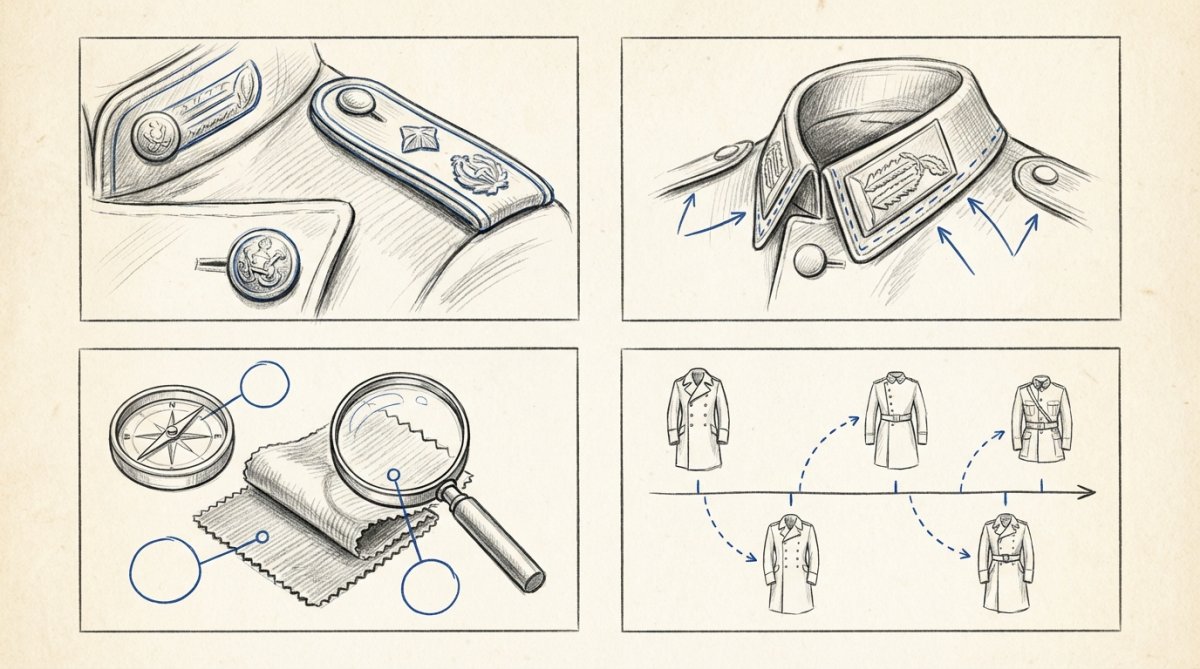
| Assess button authenticity | Examine the materials and markings on the buttons to ensure they align with the coat's purported era and origin. This is a crucial step in verifying the authenticity of antique-style military coats. |
| Inspect for wear patterns | Analyze the wear and tear for consistency with the coat's supposed age and use. Be wary of damage that appears inconsistent or too modern, which could indicate a reproduction. |
| Check labels and markings | Confirm that original labels, markings, and stamps are present and legible. These elements offer valuable historical context and aid in verifying the coat's authenticity. |
| Consider wool grade matters | Prioritize higher wool grades for enhanced durability and warmth, ensuring the coat's longevity and providing adequate protection from the elements. |
Navigating the World of Antique Military Coats: A Collector's Guide
- What to Look for in Antique Style Military Coats: A Collector's Guide
- A Brief History of Military Coats and Their Enduring Appeal
- Key Authentic Military Jacket Features for Buyers
- Vintage Military Coat Buttons: What to Examine
- Best Antique Military Coat Materials to Seek
- How to Identify Reproduction Military Jackets vs Originals
- Exploring Different Styles of Antique Military Coats
- Top Antique Military Coat Brands
- Hussar Jackets: Embrace Historical Elegance
- Rothco Vintage M-65 Field Jacket: Rugged Durability
- Private White V.C. Pea Coat: Handcrafted Excellence
- Epic Militaria Original Swiss Army Wool Great Coat: Authentic Warmth
- Alpha Industries MA-1 Flight Jacket: Iconic Style
- WWII U.S. Army Wool Overcoat M1939/M1942 Reproduction: Historical Accuracy
- What to Look for in Antique Style Military Coats: Assessing Condition and Wear
- Military Coat Inspirations in Pop Culture
- DIY Alterations and Customization for a Modern Fit
- Ethical and Sustainable Sourcing of Vintage Military Coats
- Military Coat Collecting as a Hobby: Building Your Collection
- Conclusion
Last Updated: March 11, 2026
What to Look for in Antique Style Military Coats: A Collector's Guide
Antique-style military coats offer a tangible connection to history, embodying the craftsmanship and design principles of past eras. When evaluating these coats, understanding their historical context and construction is crucial. This guide details the characteristics, materials, and styles that define authentic antique military coats, providing collectors, reenactors, and history enthusiasts with the knowledge to make informed acquisition decisions.
A Brief History of Military Coats and Their Enduring Appeal
Military coats have evolved significantly, mirroring advancements in combat, technology, and evolving fashion trends. From the ornate uniforms of the Napoleonic era to the functional field jackets of the 20th century, each style reflects a specific historical narrative. These garments not only shielded soldiers from the elements but also signified their rank, unit affiliation, and national identity.
From Necessity to Fashion Statement
Initially designed for protection and warmth, military coats have transitioned into iconic fashion staples. Their rugged aesthetic and historical resonance have propelled their popularity as outerwear, influencing both men's and women's fashion. Their versatility allows seamless integration into diverse wardrobes.
Key Authentic Military Jacket Features for Buyers
Focusing on authentic details is paramount when evaluating antique military coats. Distinguishing genuine military garments from civilian imitations significantly enhances a collection and deepens historical understanding. One key element is the presence of specific military specifications.
Understanding Military Specifications and Contracts
Military clothing typically adheres to stringent government contracts, dictating precise materials, construction techniques, and design attributes. These contracts often feature a unique numbering system imprinted on the garment's label. According to Rare Gear USA and The Chaplain Kit, collectors and museums have standardized these contract numbering systems. DA numbers were used from 1953 to 1962, DSA numbers from 1962 to 1977, DLA numbers from 1978 to 1993, and SPO numbers from 1994 to the present. Verifying these numbers aids in determining a garment's age and confirming its authenticity.
Vintage Military Coat Buttons: What to Examine
Vintage military coat buttons transcend their functional role as fasteners; they represent miniature historical artifacts offering valuable insights into a coat's history and authenticity. By scrutinizing the styles, materials, and markings of buttons, one can discern the coat's age, the military branch it served, and even its manufacturer.
Button Materials and Their Significance
The materials employed in military coat buttons have evolved, reflecting technological advancements and resource availability. Brass was a prevalent choice for early military buttons due to its durability and resistance to rust. Bone, wood, and plastic have also been utilized, each possessing distinct characteristics and historical importance.
Best Antique Military Coat Materials to Seek
The materials constituting antique military coats significantly influence their longevity, thermal properties, and overall value. Wool, cotton, and leather were commonly employed, each providing varying degrees of protection and comfort. Comprehending the attributes of these materials is essential for assessing a coat's quality and suitability.
Wool Grades and Their Impact on Durability
Wool was a favored material for military coats due to its superior insulation and water resistance. However, wool quality varies significantly based on sheep breed, processing methods, and weaving techniques. Higher wool grades, such as melton wool, exhibit greater density, strength, and weather resistance. For instance, Private White V.C. utilizes heavy 30 oz melton wool in their Pea Coat, enhancing its windproof and water-resistant properties. Collectors should prioritize higher wool grades for enhanced durability. One practical tip is to check for a tight weave, which indicates a higher-quality wool. Be aware that wool can be susceptible to moth damage if not stored properly.
How to Identify Reproduction Military Jackets vs Originals
Differentiating between original antique military coats and reproductions demands keen observation and meticulous attention to detail. While reproductions may mimic authentic items, they often lack the genuine materials, construction methodologies, and historical precision valued by collectors. Knowing how to identify reproduction military jackets is vital for serious collectors. Watch out for inconsistencies in stitching or hardware, which can be telltale signs of a reproduction.
Examining Labels, Markings, and Stamps
Labels, markings, and stamps furnish crucial information regarding a military coat's origin and authenticity. Original military garments typically feature labels containing detailed information about the manufacturer, contract number, size, and materials. These labels may also bear government inspection stamps or other markings indicating the coat's intended purpose. For example, a Quartermaster stamp indicates the coat met specific military standards at the time of production. Be wary of labels that appear too new or have inconsistent fonts, as these are red flags for reproductions.
Exploring Different Styles of Antique Military Coats
Military coats encompass a diverse array of styles, each tailored for specific functions and climates. From heavy wool overcoats designed for frigid conditions to lightweight field jackets suited for warmer climates, each style addresses the unique requirements of the soldiers who wore them.
Pea Coats: A Timeless Naval Classic
Pea coats exemplify military outerwear that has successfully transitioned into civilian fashion. Originally worn by sailors in the US Navy and other navies, pea coats feature a double-breasted front, a wide collar, and are crafted from heavy wool. These coats provide exceptional protection against wind and rain, rendering them ideal for maritime environments.
Field Jackets: Versatile and Functional
Field jackets, such as the M-65, represent another popular style of military coat favored for its versatility and functionality. These jackets boast numerous pockets, durable construction, and often incorporate a removable liner for added warmth. Field jackets are practical for everyday wear, outdoor pursuits, and individuals seeking a vintage military aesthetic. The Rothco Vintage M-65 Field Jacket offers a vintage washed look and feel, along with ample storage pockets, ranging in price from $83.99 to $139.00.
Top Antique Military Coat Brands
Hussar Jackets: Embrace Historical Elegance
Hussar Jackets specializes in providing unique and historical fashion through its range of antique and historical style jackets and uniforms. Their core offering includes custom-made Hussar jackets, alongside other historical garments such as British uniforms, Dolman jackets, and Napoleon Era jackets. Hussar Jackets enables customers to express their passion for history and distinguish themselves with unique fashion pieces within the niche market of historical and antique-style clothing.
Rothco Vintage M-65 Field Jacket: Rugged Durability
The Rothco Vintage M-65 Field Jacket draws inspiration from classic military designs, delivering both durability and style. It features a vintage washed appearance, multiple pockets for storage, and robust construction with reinforced stitching. Available in various colors and camouflage patterns, it often includes a removable liner for added warmth. It's suitable for everyday wear, outdoor pursuits, and individuals seeking a vintage military-inspired look. The price typically ranges from $83.99 to $139.00 Rothco Vintage M-65 Field Jacket product page.
Private White V.C. Pea Coat: Handcrafted Excellence
The Private White V.C. Pea Coat is a high-quality, handcrafted garment constructed from heavy melton wool, providing windproof and water-resistant protection. Hand-made in Manchester, England, using 30 oz melton wool, it features a double-breasted front and wide collar. This classic naval design is perfect for those seeking a premium, durable, and stylish pea coat with a distinguished military heritage. Contact Private White V.C. for pricing Private White V.C. Pea Coat product page.
Epic Militaria Original Swiss Army Wool Great Coat: Authentic Warmth
The Epic Militaria Original Swiss Army Wool Great Coat offers authentic warmth and durability for collectors and enthusiasts. As genuine military surplus, it's made from heavy wool and includes a liner for enhanced warmth. Its grey color and double-breasted closure make it ideal for collectors, reenactors, and anyone wanting a warm and authentic military coat. Contact Epic Militaria for pricing Epic Militaria Swiss Army Great Coat product page.
Alpha Industries MA-1 Flight Jacket: Iconic Style
The Alpha Industries MA-1 Flight Jacket is a classic flight jacket with a rich military history, known for its warmth, durability, and iconic style. It features a reversible design, water-resistant nylon shell, ribbed cuffs and waistband, and multiple pockets, including a signature utility/pencil pocket. Available in various colors, it's best suited for everyday wear, aviation enthusiasts, and those looking for a classic bomber jacket. Contact Alpha Industries for pricing Alpha Industries MA-1 Flight Jacket product page.
WWII U.S. Army Wool Overcoat M1939/M1942 Reproduction: Historical Accuracy
The WWII U.S. Army Wool Overcoat M1939/M1942 Reproduction offers a historically accurate design for reenactors and vintage enthusiasts. As an accurate reproduction of the M1939/M1942 pattern, it's made from wool, featuring a double-breasted closure and long length for warmth and coverage. Its authentic military details make it ideal for WWII reenactors, vintage collectors, and those seeking a historically accurate military coat. Contact the seller on Etsy for pricing.
What to Look for in Antique Style Military Coats: Assessing Condition and Wear
When examining antique style military coats, assessing their condition and wear is paramount. Even the most authentic coat diminishes in value if it's damaged or poorly maintained. A thorough inspection can reveal issues that impact its longevity and desirability.
Spotting and Addressing Common Issues
Common issues in antique military coats include moth damage, stains, tears, and fading. Moths can compromise the fabric's integrity, creating holes. Stains, particularly if aged, can be challenging to remove. Tears and fading detract from the coat's aesthetic appeal and diminish its value. When evaluating wear, prioritize areas subject to frequent use, such as elbows, cuffs, and shoulders, as these areas often exhibit initial signs of wear. Note that improper repairs can devalue a coat. Consulting a textile conservator is advisable for significant damage.
Military Coat Inspirations in Pop Culture
Military coats have frequently appeared in films, television programs, and music videos, contributing to their iconic status. From Marlon Brando's M-65 field jacket in "Apocalypse Now" to the pea coats donned by actors in naval dramas, these garments have become synonymous with specific characters and historical periods.
DIY Alterations and Customization for a Modern Fit
While antique military coats possess historical charm and style, their fit may not always align with contemporary preferences. Alterations and customizations can facilitate a more modern fit without compromising the coat's original character. Minor adjustments, such as tailoring the sleeves or waist, can significantly enhance the coat's appearance and comfort. Exercise caution when altering antique garments. Whenever feasible, avoid cutting the original fabric and consider enlisting a professional tailor specializing in vintage clothing. Document all alterations, as they can influence the coat's collector value.
Ethical and Sustainable Sourcing of Vintage Military Coats
As interest in vintage clothing grows, ethical and sustainable sourcing practices become increasingly vital. Purchasing vintage military coats from reputable dealers or directly from private sellers can help ensure that you're not supporting unethical labor practices or harming the environment. Prior to purchase, investigate the seller's reputation and inquire about the coat's provenance. Supporting businesses committed to ethical sourcing safeguards the integrity of the vintage market.
Military Coat Collecting as a Hobby: Building Your Collection
Collecting military coats offers an engaging and educational hobby that connects individuals to history. Building a collection requires patience, research, and meticulous attention to detail. Begin by concentrating on a specific era, military branch, or coat style of interest, and then expand your collection as your knowledge deepens.
"There is a certain mystery that surrounds this uniform because we have not clearly identified it yet" -- Paul Morando, Museum Director at the Army Quartermaster Museum (Army.mil).
This underscores the ongoing research and discovery involved in collecting military clothing.
Conclusion
Success in the realm of antique style military coats hinges on historical knowledge, meticulous attention to detail, and a genuine appreciation for craftsmanship. By considering the key features, materials, and styles detailed in this guide, you can confidently navigate the world of vintage military outerwear and curate a collection that reflects your personal style and passion for history.
"This has pretty much been the one thing that's been a thorn in my side" -- Luther Hanson, Museum Curator at the Army Quartermaster Museum (Army.mil), demonstrating the dedication required to authenticate and preserve these historical garments.
Finding antique military coats that meet your specific standards can be difficult, especially when you're looking for historical accuracy and a precise fit. Hussar Jackets is an excellent choice, offering custom-made Hussar jackets and other historical clothing tailored to your exact needs. With Hussar Jackets, you can be sure that your custom measurements and historical details are carefully followed, allowing you to finally get historical uniforms that fit perfectly without needing any alterations. Start your journey with Hussar Jackets and confidently show off your unique historical style.
Comments
Be the first to comment.